The Cornerstones of Our Business Philosophy
At Novelty Hill IP, these six books form the intellectual foundation of how we approach patent analytics, make decisions under uncertainty, and communicate complex data to our clients. They're not just books we've read—they're principles we live by and discuss almost every day in our work. They've transformed how we think about patents, data, and human judgment, continuing to guide us toward better outcomes for our clients.
Our Foundation Books
Six transformative works that guide our approach to patent intelligence and decision-making
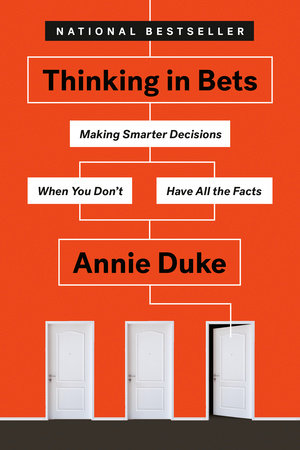
Thinking in Bets
Former poker champion Annie Duke shows how viewing decisions as bets helps us get comfortable with uncertainty and make better choices even when we don't have all the facts.
How We Apply This to Patent Analytics:
Every patent decision is inherently probabilistic. From evaluating whether an innovation is patentable to forecasting litigation risks, uncertainty is ever-present. We use Duke's framework to help clients understand that patent decisions are bets on future outcomes, and we can improve these decisions by clearly communicating probability and acknowledging unknowns. This approach forms the foundation of our analytical process.
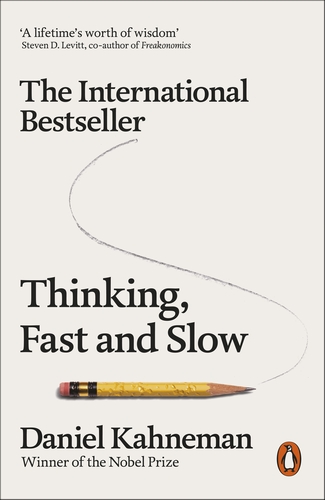
Thinking Fast and Slow
Nobel Prize-winning psychologist Daniel Kahneman reveals how our minds operate through two systems - one fast and intuitive, the other slow and deliberative - and how this affects our judgment and decision-making.
How We Apply This to Patent Analytics:
Patent professionals often rely on intuition and experience (System 1), which can lead to cognitive biases such as recency bias or overconfidence. Our data science approach activates deliberate thinking (System 2) by providing objective analytics that challenge assumptions. For example, we mitigate recency bias by supplying historical data relevant to the decision at hand, preventing recent cases from disproportionately influencing strategy.
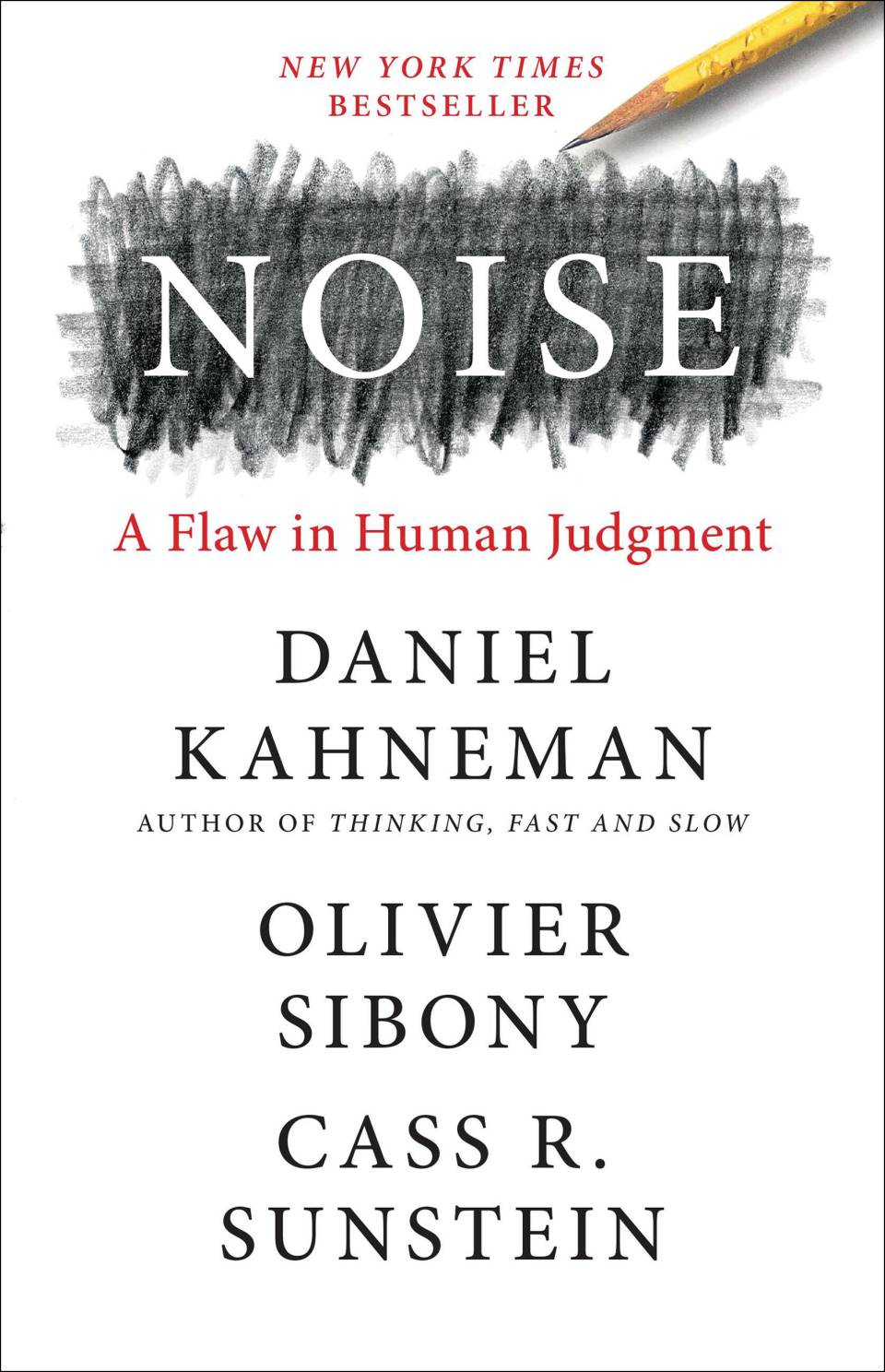
Noise: A Flaw in Human Judgment
This groundbreaking work examines "noise" - unwanted variability in judgments that should be identical - and reveals practical remedies to reduce both noise and bias in decision-making across medicine, law, business, and many other fields.
How We Apply This to Patent Analytics:
The patent world is rife with noise—from inconsistent examiner decisions to varying court interpretations of patent law. By acknowledging this variability exists, we can measure it and differentiate between signal and noise in our analyses. Our machine learning models incorporate noise awareness, allowing us to provide clients with confidence intervals and uncertainty measures rather than misleading point predictions.
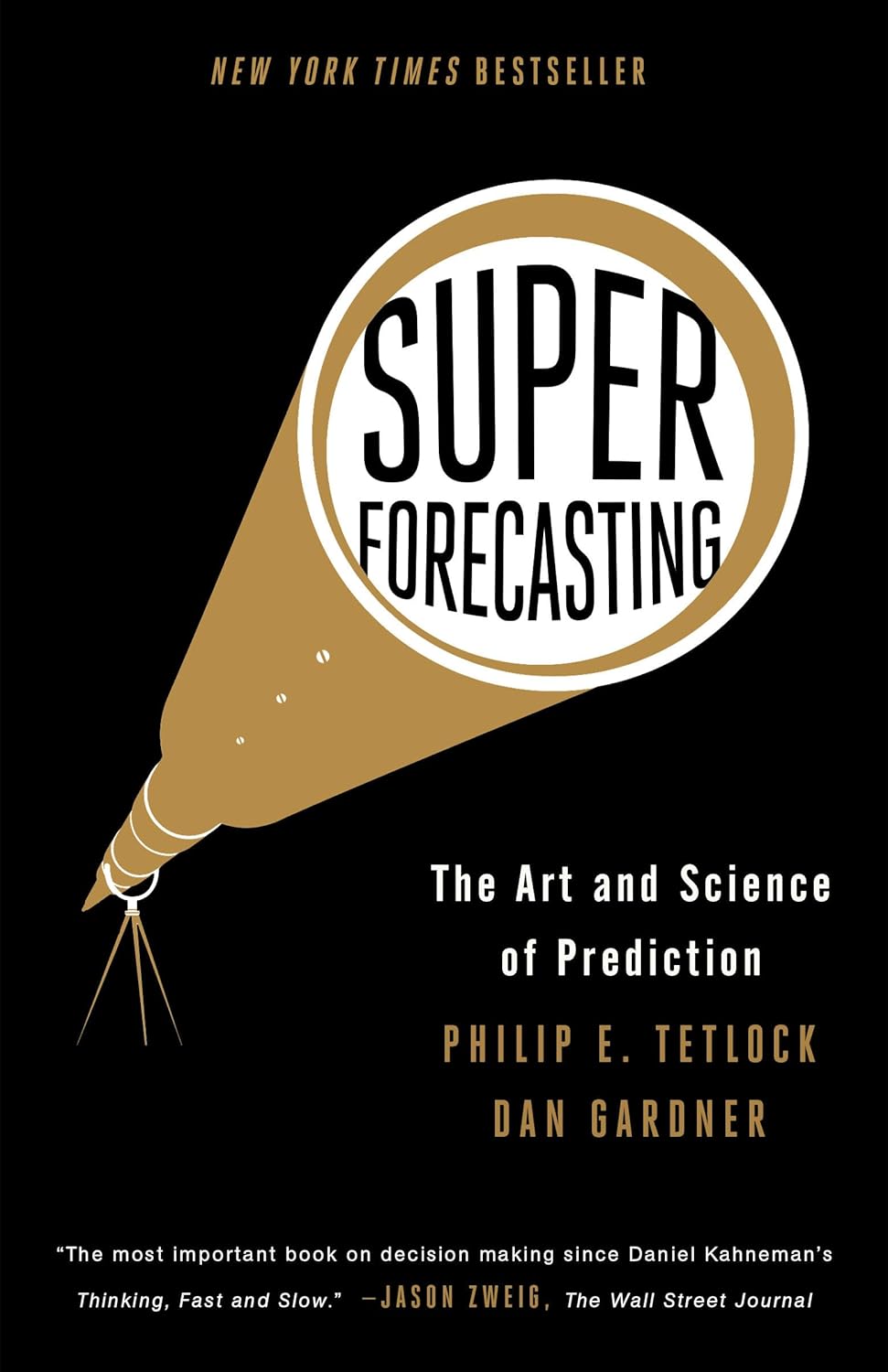
Superforecasting
Philip Tetlock and Dan Gardner reveal how ordinary people can make extraordinarily accurate predictions through specific techniques that improve forecasting abilities in an uncertain world.
How We Apply This to Patent Analytics:
Tetlock's research on forecasting informs our predictive modeling approach to patent strategy. We incorporate superforecasting principles like updating predictions incrementally as new information arrives, quantifying uncertainty, breaking complex questions into tractable sub-problems, and avoiding both over-confidence and over-correction. This methodical approach helps us provide more accurate guidance on patent portfolios' future value and litigation risks.
Particularly valuable is Tetlock's finding that diverse teams of forecasters outperform individuals, which is why we combine human expertise with machine learning for optimal results.
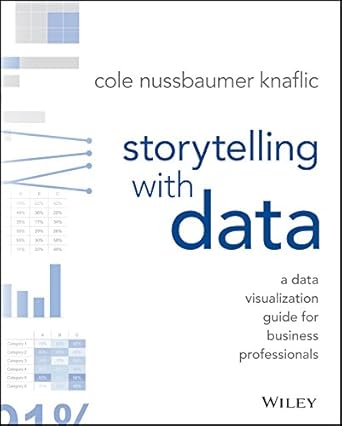
Storytelling with Data
Cole Nussbaumer Knaflic teaches how to transform raw data into compelling visual stories by eliminating clutter, focusing attention on key points, and creating clear, engaging presentations that drive decision-making.
How We Apply This to Patent Analytics:
This book directly complements Kahneman's "Thinking Fast and Slow" in our work. When presenting patent data to decision-makers to combat cognitive bias, we must do so in a fast, efficient, and unbiased manner. Knaflic's visualization principles help us present information that engages System 2 thinking without triggering System 1 biases.
Patent data visualizations are often cluttered and difficult to interpret, activating cognitive shortcuts rather than deliberate analysis. We apply Knaflic's principles to distill complex patent landscapes into clear, actionable visuals that bypass biases and lead to better decisions. Our visualizations are specifically designed to prevent common patent-related biases such as confirmation bias (seeking patents that confirm existing strategies) and availability bias (overemphasizing recently-encountered patents).

The Four Agreements
Don Miguel Ruiz shares four powerful agreements derived from ancient Toltec wisdom that, when practiced, can transform your life by freeing you from self-limiting beliefs and fear.
How We Apply This to Patent Analytics:
The Four Agreements might seem unusual for a patent analytics firm, but they guide how we interact with clients and each other: Be impeccable with your word (we provide honest assessments, even when difficult); Don't take anything personally (we separate data from ego); Don't make assumptions (we verify our understanding of client goals); Always do your best (we continually refine our methods). These principles create a foundation of trust that's essential when advising on high-stakes patent decisions.
How These Books Shape Our Patent Analytics Approach
These books work together to create our unique approach to patent analytics. Thinking in Bets and Superforecasting provide the probabilistic framework we use to evaluate patent decisions and predict outcomes. Thinking Fast and Slow and Noise help us understand the cognitive biases and variability inherent in patent judgments and how to counteract them with data science.
Storytelling with Data works in tandem with Thinking Fast and Slow by helping us present patent information that bypasses System 1 biases and engages System 2 analytical thinking. Our visualizations are deliberately designed to combat cognitive biases while making complex patent data accessible. Finally, The Four Agreements shapes our client interactions, ensuring that our technical expertise is delivered with clarity, honesty, and mutual respect.
Together, these principles allow us to bridge the gap between human expertise and machine learning in patent analytics, providing insights that are both technically sound and practically useful. We don't just recommend these books—we live by them. They're the intellectual infrastructure that supports everything we do.